
These two illustrations beautifully capture the past and present of the Hyakutaro Mizo (Hyakutaro Canal), a historic irrigation system that transformed the Hitoyoshi-Kuma Basin into a wealthy rice-producing region.
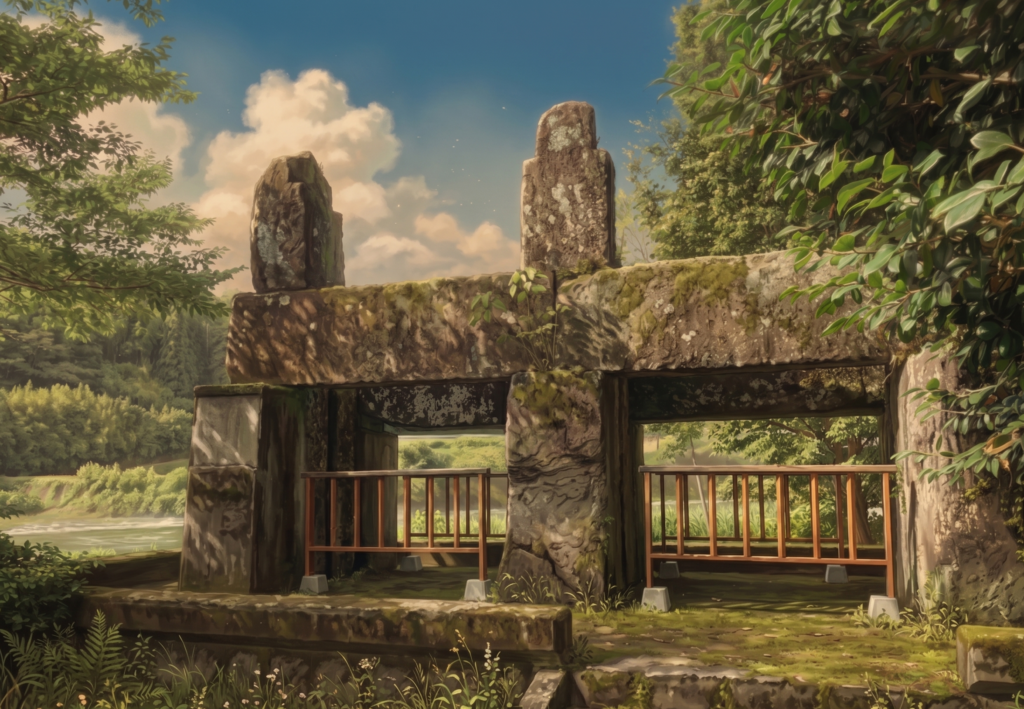
The Historic Stone Sluice
The first image depicts the historic stone intake gates. Built during the Edo period (early 1700s), constructing a weir across the raging, fast-flowing Kuma River was an incredibly difficult task. The structure was washed away by floods time and time again. According to a famous local legend, a man named Hyakutaro willingly offered himself as a human sacrifice (hitobashira) to appease the angry river gods. After his sacrifice, the weir withstood the floods, and the canal was successfully completed. These moss-covered stone pillars stand today not just as historic ruins, but as a quiet, sacred memorial to the sacrifices made by ancestors to tame the wild river.
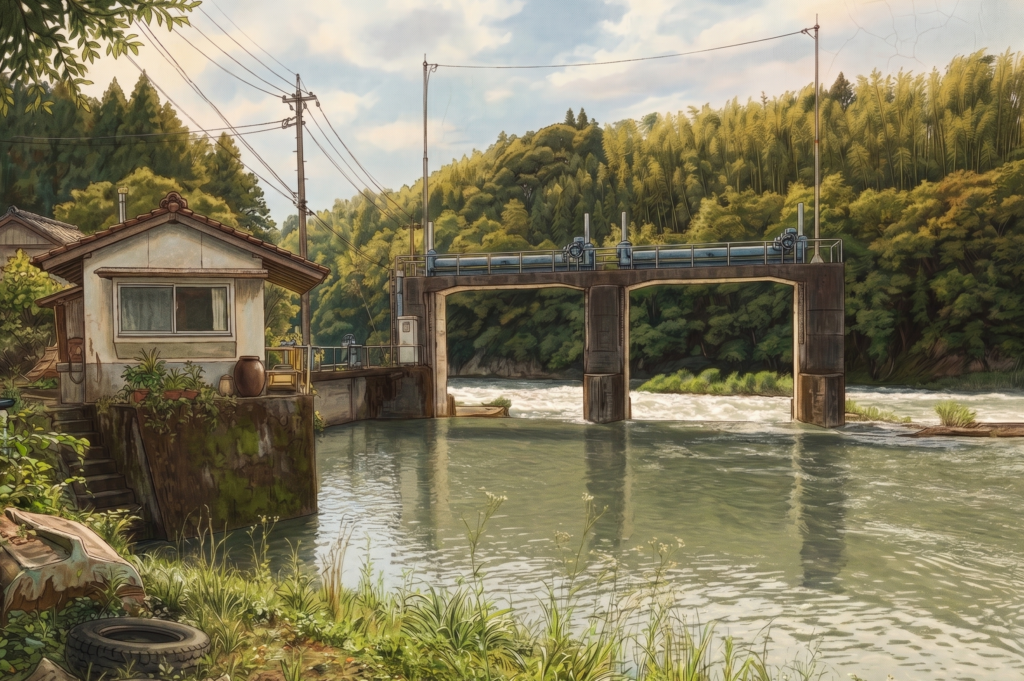
The Modern Weir
The second image shows the modern barrage that operates today. While the ancient wooden and stone structures struggled against the forces of nature, modern engineering now safely controls the powerful Kuma River. This new facility proudly carries on Hyakutaro’s legacy, reliably distributing the clear, mineral-rich waters of the river to the surrounding rice paddies. The high-quality rice grown with this water is the very foundation of the world-famous Kuma Shochu!
コメント